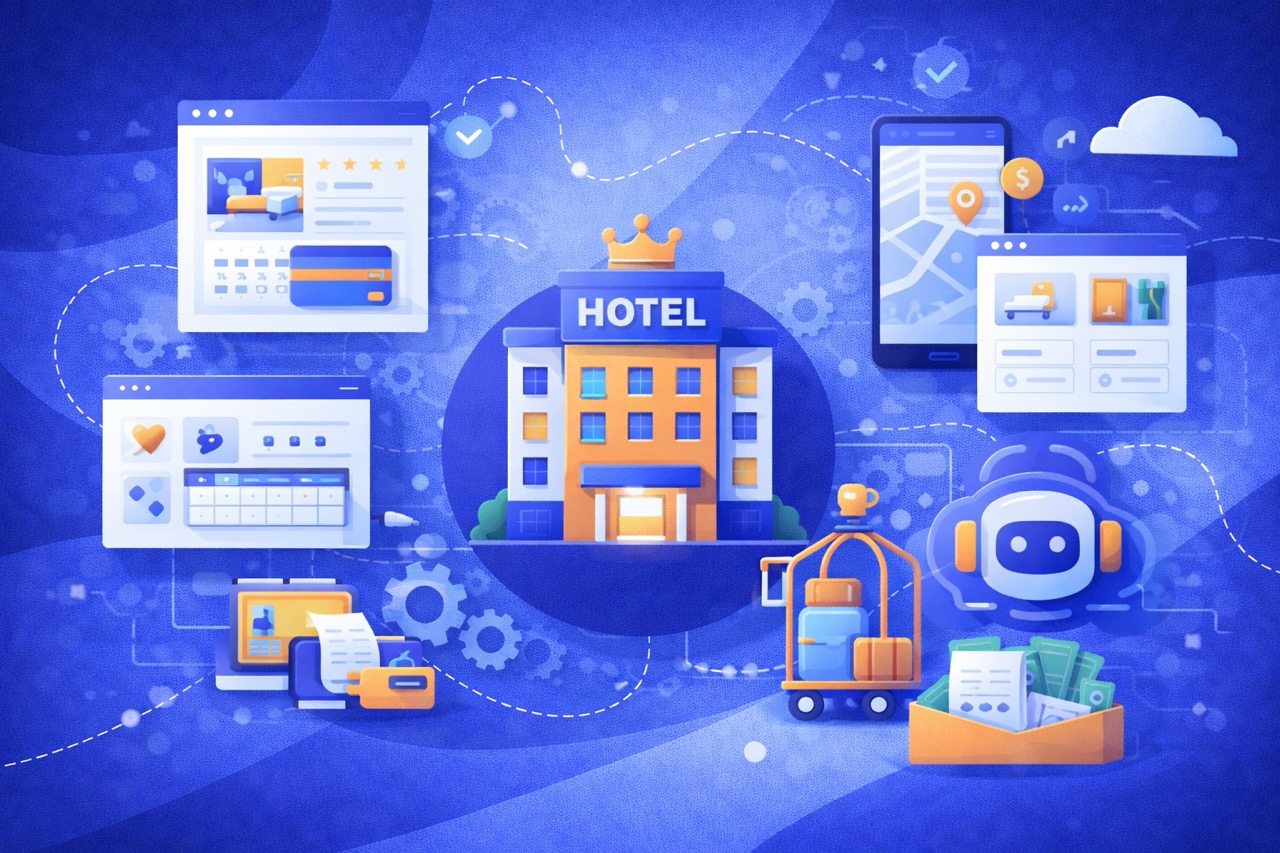
Running a successful hotel or resort is no small feat. From managing bookings and guest communications to coordinating front desk operations, housekeeping, and maintenance, the sheer volume of tasks can quickly overwhelm even the most seasoned hospitality professionals. Add to that the challenges of high staff turnover and constant retraining, and it’s clear why many hotel managers and operators struggle to maintain efficiency while delivering exceptional guest experiences.
This guide is designed to help you tackle these challenges head-on by leveraging automation. Whether you’re dealing with fragmented operations, slow response times, or the burden of repetitive manual tasks, automation can streamline your workflows, improve team collaboration, and elevate your guest satisfaction. Packed with actionable insights and industry-specific solutions, this resource will show you how to optimize your processes, reduce operational bottlenecks, and future-proof your hospitality business.
The Brutal Truth About Manual Operations in Hospitality & Hotels
Skyrocketing Labor Costs and Hidden Fees
Labor costs are the single largest expense for most hotels, often accounting for 50% or more of operational budgets. And it’s not just wages—hidden costs like overtime, recruitment, and training pile up quickly. When your front desk staff spends hours manually entering reservations or your housekeeping team is bogged down by paper-based room status updates, you’re essentially paying for inefficiency.
Why It Matters: Every minute spent on repetitive manual tasks is a minute not spent delivering exceptional guest experiences. Over time, these inefficiencies erode profitability and guest loyalty.
Guest Dissatisfaction from Slow Response Times
In today’s on-demand world, guests expect instant responses. Whether it’s a room service request, a booking inquiry, or a maintenance issue, delays can quickly sour the guest experience. Imagine a guest waiting 20 minutes for their room to be cleaned because housekeeping wasn’t notified in real-time—or worse, being put on hold while your front desk staff manually checks availability.
Pro Tip: Automating guest communication with tools like AI-powered chatbots can cut response times to seconds, boosting satisfaction scores and reducing the workload on your team.
High Turnover and Repetitive Training Burden
The hospitality industry faces one of the highest turnover rates of any sector, often exceeding 70% annually. This creates a vicious cycle: new hires require constant training, which drains time and resources, only for them to leave and start the process over again. Manual processes amplify this burden by requiring staff to learn outdated, inefficient workflows.
Bold Takeaway: Automation doesn’t just reduce workload—it creates consistency. When systems handle repetitive tasks, your team can focus on what they do best: creating memorable guest experiences.
For a deeper dive into how automation can transform your operations, explore our Hospitality & Hotels automation service.
The 4 Levels of Automation Maturity for Hotels
Automation isn’t a one-size-fits-all solution. Hotels and resorts evolve through distinct stages of automation maturity, each unlocking new efficiencies and guest experience enhancements. Understanding where your property stands—and what’s next—can help you prioritize investments and avoid costly missteps.
Manual Processes with Basic Software
The Starting Line
At this stage, hotels rely heavily on manual workflows, with basic software tools like spreadsheets or standalone systems for reservations and billing. Processes are fragmented, prone to human error, and time-intensive.
Efficiency is low, and staff spends more time on admin tasks than guest engagement.
Task-Specific Automation
Streamlining Individual Tasks
Hotels begin adopting automation for specific tasks, such as online booking engines, automated billing, or email confirmations. While these tools save time, they operate in silos, requiring manual handoffs between departments.
You’ll see some time savings, but operational bottlenecks persist due to lack of integration.
Integrated Workflows Across Departments
Breaking Down Silos
This level focuses on connecting systems across departments. For example, your PMS syncs with housekeeping software to automatically update room statuses, and guest requests flow seamlessly from front desk to maintenance.
Departments collaborate effortlessly, reducing delays and improving the guest experience.
AI-Driven, Predictive Operational Excellence
The Gold Standard
At this pinnacle, hotels leverage AI and predictive analytics to anticipate needs and optimize operations. Think dynamic room pricing, predictive maintenance alerts, and personalized guest experiences based on historical data.
Your hotel operates like a well-oiled machine, delighting guests while maximizing profitability.
Why It Matters: The Cost of Staying Stuck
Hotels stuck at Level 1 or 2 face mounting inefficiencies and struggle to meet modern guest expectations. Meanwhile, competitors at Level 3 or 4 are delivering faster service, higher satisfaction, and better margins.
Pro Tip: Not sure where your hotel stands? Start with a Free Automation Audit to identify gaps and opportunities.
How to Advance to the Next Level
- Audit Your Current Tools: Are they integrated or isolated? Identify where manual handoffs slow you down.
- Prioritize High-Impact Areas: Focus on automating tasks like booking, housekeeping coordination, and guest communication first.
- Invest in Scalable Solutions: Choose systems with open APIs to ensure compatibility as you grow.
- Train Your Team: Automation is only as effective as the people using it. Build confidence with training and clear workflows.
Bold Takeaway: Automation maturity isn’t just about technology—it’s about transforming how your team works together. Each level unlocks exponential value, from time savings to unforgettable guest experiences. Ready to take the next step? Explore our Hospitality & Hotels automation service.
The 10 Most Expensive Manual Tasks in Hotel Operations
Manual processes in hotel operations don’t just waste time—they drain profitability. Below, we’ve ranked the most expensive manual tasks across key departments. If you’re looking for where to start with automation, this is your Money Pit Map.
Front Desk Workflows
The front desk is the heartbeat of your hotel, but manual workflows can slow it to a crawl. Here are the biggest offenders:
Reservation Entry and Double-Checking
Manually entering reservations from third-party booking platforms into your PMS is not only tedious but also error-prone. A single typo can lead to overbookings or missed revenue opportunities.Manual Check-In/Out and Folio Reconciliation
Guests expect a seamless check-in/out experience, but manual processes often mean long lines and frustrated travelers. Reconciling folios manually at checkout adds another layer of inefficiency.Room Upsell Calls and Cross-Sell Coordination
Calling guests to upsell room upgrades or coordinate cross-sells (like spa packages) is time-consuming and often yields inconsistent results.
Pro Tip: Automating upsell offers via email or SMS—integrated with your PMS—can increase revenue per guest while freeing up your front desk team.
Housekeeping Coordination
Housekeeping is one of the most labor-intensive departments, and manual processes only add to the chaos.
Paper-Based Status Updates
Relying on paper checklists or verbal updates to track room cleaning status leads to delays and miscommunication. This often results in rooms sitting vacant longer than necessary.Manual Room Assignment and Tracking
Assigning rooms to housekeepers manually, often via spreadsheets or whiteboards, creates inefficiencies and makes it harder to adapt to last-minute changes.Inventory Reorder and Supply Management
Tracking housekeeping supplies manually increases the risk of running out of essentials like toiletries or linens, directly impacting guest satisfaction.
Why It Matters: Automating housekeeping coordination with real-time tools can reduce room turnover times by up to 30%, improving both guest satisfaction and operational efficiency.
Facilities & Maintenance
Facilities management is often reactive rather than proactive, especially when manual processes dominate.
Work Order Logging via Email/Phone
Maintenance requests coming in via email or phone are easy to lose or misprioritize, leading to delayed repairs and unhappy guests.Preventive Maintenance Scheduling by Spreadsheet
Using spreadsheets to schedule preventive maintenance is not only cumbersome but also risky. A missed task could result in costly equipment failures or safety issues.
Bold Takeaway: IoT sensors and automated maintenance workflows can predict issues before they happen, saving thousands in emergency repair costs.
Guest Communication & Feedback
Guests expect instant communication, but manual processes can turn a simple inquiry into a frustrating experience.
Manual SMS/Email Confirmation Blasts
Sending booking confirmations or reminders manually is a repetitive task that eats up hours of staff time—time better spent on guest engagement.Real-Time Complaint Logging on Spreadsheets
Logging guest complaints manually, often in spreadsheets, delays resolution and creates a poor impression. Guests want to feel heard immediately.
Pro Tip: Deploying an AI-powered chatbot for real-time guest inquiries and complaints can boost satisfaction scores by up to 20% while lightening your team’s workload.
Bold Takeaway: These manual tasks are costing you time, money, and guest loyalty. By automating even one or two of these areas, you can unlock significant savings and create a smoother experience for both staff and guests. Ready to start? Book a Free Audit to identify your biggest opportunities.
3 Key Playbook Categories with Specific Use Cases
Automation in hospitality isn’t a one-size-fits-all solution. To truly transform your operations, you need targeted strategies that address specific pain points. Below, we’ve outlined three high-impact playbooks, complete with real-world use cases to help you take action immediately.
Playbook 1: Seamless Booking & Check-In Automation
Your guests’ journey begins long before they step into your lobby. From rate comparisons to check-in, every step should be frictionless.
Use Case: Instant Rate Comparisons via API
Imagine a guest browsing your website and instantly seeing the best available rate compared to OTAs like Booking.com or Expedia. By integrating your Property Management System (PMS) with an API, you can pull real-time rate data and display it seamlessly. This not only builds trust but also encourages direct bookings, saving you on OTA commission fees.Pro Tip: Tools like RateGain or SiteMinder can automate rate updates across platforms, ensuring pricing parity without manual intervention.
Use Case: Self-Service Check-In Kiosks with PMS Sync
Long front desk queues are a surefire way to frustrate guests. Self-service kiosks allow guests to check in, select their room, and even generate a key—all synced with your PMS. This reduces wait times and frees up staff to focus on personalized service.Why It Matters: Hotels using self-service kiosks report up to a 40% reduction in check-in times, leading to higher guest satisfaction scores.
Playbook 2: Staff Scheduling & Training Efficiency
Your team is your greatest asset, but managing schedules and training manually can be a logistical nightmare. Automation can streamline these processes, saving time and reducing turnover.
Use Case: Automated Shift Swaps and Notifications
Scheduling conflicts are inevitable, but they don’t have to derail your operations. With workforce management tools like Deputy or HotSchedules, staff can request shift swaps directly through an app. Managers receive automated notifications for approval, eliminating back-and-forth emails or phone calls.Bold Takeaway: Automated scheduling reduces administrative workload by up to 80%, allowing managers to focus on guest experience instead of logistics.
Use Case: E-Learning Modules with Progress Tracking
Onboarding and training new hires is a constant challenge in hospitality. E-learning platforms like TalentLMS or Docebo can deliver training modules tailored to your hotel’s needs. Progress tracking ensures employees complete their training on time, while quizzes and certifications ensure comprehension.Why It Works: Hotels that implement e-learning see a 25% faster onboarding process and higher staff retention rates.
Playbook 3: Real-Time Guest Communication & Feedback
In today’s hyper-connected world, guests expect instant, personalized communication. Automation tools can help you meet—and exceed—those expectations.
Use Case: AI-Chatbot for 24/7 Inquiries
Whether it’s a late-night room service request or a question about local attractions, an AI-powered chatbot can handle guest inquiries instantly. Tools like Zendesk or HiJiffy integrate with your PMS to provide personalized responses, lightening the load on your front desk team.Pro Tip: AI-chatbots can resolve up to 70% of guest inquiries without human intervention, giving your team more time to focus on complex issues.
Use Case: Automated Post-Stay Survey with Sentiment Analysis
Gathering guest feedback is crucial, but manually sifting through surveys is time-consuming. Automation platforms like Medallia or Revinate can send post-stay surveys automatically and analyze responses for sentiment. This helps you identify trends and address issues proactively.Bold Takeaway: Hotels using sentiment analysis tools report a 15% improvement in online review scores within six months.
Final Thought: These playbooks aren’t just about saving time—they’re about elevating the guest experience and empowering your team. Start small by automating one or two use cases, and watch the ripple effect transform your operations. Ready to explore your options? Book a Free Audit to uncover your biggest opportunities.
Recommended Tech Stack for Hospitality Automation
The right technology can be the difference between a hotel that thrives and one that struggles to keep up. Below, we break down the essential tools every modern hotel needs to automate operations, delight guests, and empower staff.
Property Management System (PMS) with Open API
Your PMS is the backbone of your hotel operations. But not all systems are created equal. A PMS with an open API allows seamless integrations with other tools, from booking engines to housekeeping software. This flexibility ensures your tech stack works as a unified ecosystem rather than a collection of disconnected tools.
Why It Matters: Open APIs enable real-time data flow, reducing manual data entry and errors. Hotels using integrated PMS systems report up to a 30% increase in operational efficiency.
Top Picks: Opera Cloud, Mews, Cloudbeds
CRM & Guest Profile Centralization
A centralized CRM helps you deliver personalized guest experiences by storing all guest data—preferences, booking history, and feedback—in one place. This enables targeted marketing campaigns, loyalty program management, and tailored service offerings.
Pro Tip: Use a CRM that syncs with your PMS to automatically update guest profiles after every stay. This ensures your team always has the latest information at their fingertips.
Top Picks: Salesforce Hospitality Cloud, Revinate, Cendyn
AI-Powered Chatbot & Messaging Platform
Guests expect immediate responses, whether they’re asking about room availability or requesting extra towels. AI-powered chatbots can handle these inquiries 24/7, while messaging platforms centralize communication across channels like SMS, WhatsApp, and email.
Bold Takeaway: Hotels using AI chatbots report resolving up to 70% of guest inquiries without human intervention, freeing up staff for more complex tasks.
Top Picks: HiJiffy, Zendesk, Asksuite
Workforce Management & E-Learning Tools
Managing schedules and training in a high-turnover industry like hospitality can be daunting. Workforce management tools automate scheduling, shift swaps, and notifications, while e-learning platforms streamline onboarding and continuous training.
Why It Works: Automated workforce tools reduce scheduling conflicts by 80%, while e-learning platforms cut onboarding time by 25%.
Top Picks: Deputy, HotSchedules, TalentLMS, Docebo
IoT Sensors for Proactive Maintenance
IoT sensors can monitor everything from HVAC systems to water usage, alerting your team to potential issues before they escalate. For example, a sensor detecting a water leak can trigger an automated maintenance ticket, preventing costly damage and downtime.
Pro Tip: Pair IoT sensors with your PMS or maintenance software for automated work order creation and tracking.
Top Picks: Roomonitor, Honeywell, SensorFlow
Final Thought: Building the right tech stack is an investment in your hotel’s future. Start with tools that address your biggest pain points, then expand as you see results. Ready to take the next step? Book a Free Audit to discover the perfect automation strategy for your property.
5 Exact Copy-Paste Automation Recipes
Automation isn’t just a buzzword—it’s a game-changer for hotel operations. Below are five ready-to-deploy automation recipes that can save you hours, reduce errors, and elevate guest satisfaction. These aren’t theoretical ideas; they’re practical, battle-tested workflows you can implement today.
Recipe 1: Auto-Confirm Bookings via SMS and Email
The Problem: Guests expect immediate confirmation after booking, but manually sending emails or SMS can delay the process and create unnecessary workload.
The Solution: Use your PMS or booking engine to trigger automated confirmation messages. Tools like Twilio or SendGrid can send personalized SMS and email confirmations instantly after a booking is made.
How It Works:
- Integrate your PMS with an email/SMS platform.
- Set up a trigger for new bookings.
- Customize templates with guest names, booking details, and check-in instructions.
Pro Tip: Include a link to modify or cancel the booking in the confirmation message. This reduces call volume to your front desk.
Recipe 2: Dynamic Room Assignment Based on Occupancy Forecast
The Problem: Manual room assignments often lead to inefficiencies, like overbooking specific room types or underutilizing premium rooms.
The Solution: Automate room assignments using occupancy data and guest preferences. Advanced PMS platforms like Mews or Opera Cloud can dynamically allocate rooms based on availability, guest history, and forecasted demand.
How It Works:
- Connect your PMS to an occupancy forecasting tool.
- Create rules for room prioritization (e.g., VIP guests get premium rooms).
- Let the system auto-assign rooms as bookings come in.
Why It Matters: Hotels using dynamic room assignment report a 20% increase in premium room utilization and fewer last-minute shuffles.
Recipe 3: Automated Maintenance Ticket Creation from IoT Alerts
The Problem: Maintenance issues often go unnoticed until guests complain, leading to poor reviews and costly emergency repairs.
The Solution: Pair IoT sensors with your maintenance management software to automate ticket creation. For example, a sensor detecting a temperature spike in the HVAC system can trigger a work order instantly.
How It Works:
- Install IoT sensors for critical systems (e.g., HVAC, plumbing).
- Integrate the sensors with a maintenance tool like Hotelogix or RoomRaccoon.
- Configure alerts to auto-create tickets with priority levels.
Bold Takeaway: Proactive maintenance reduces emergency repairs by up to 30%, saving both time and money.
Recipe 4: Shift Swap Workflow with Manager Approval
The Problem: Managing shift swaps manually is chaotic, leading to scheduling conflicts and overworked staff.
The Solution: Use workforce management software to automate shift swap requests. Tools like Deputy or HotSchedules allow employees to request swaps, notify managers, and update schedules in real time.
How It Works:
- Enable shift swap functionality in your workforce tool.
- Set up manager approval workflows.
- Notify all affected staff automatically once a swap is approved.
Why It Works: Automating shift swaps reduces scheduling conflicts by 80% and improves staff satisfaction.
Recipe 5: Post-Checkout Feedback Trigger and Analysis
The Problem: Collecting guest feedback manually is time-consuming, and analyzing it for actionable insights is even harder.
The Solution: Automate post-checkout surveys with sentiment analysis. Tools like Medallia or Revinate can send surveys immediately after checkout and analyze responses for trends.
How It Works:
- Set up your PMS to trigger surveys after check-out.
- Use templates to ask specific, actionable questions (e.g., “How would you rate your room cleanliness?”).
- Leverage sentiment analysis to identify recurring issues or opportunities.
Bold Takeaway: Hotels using automated feedback tools see a 15% improvement in online review scores within six months.
Final Thought: These automation recipes are your shortcut to operational excellence. Start with one or two that address your biggest pain points, and scale from there. Ready to see how automation can transform your hotel? Book a Free Audit with our experts today!
Ensuring Security & Compliance in Hotel Automation
Data Protection Best Practices (GDPR, CCPA)
Automating your hotel operations doesn’t just boost efficiency—it also introduces new responsibilities. With guest data at the heart of automation, compliance with data protection laws like GDPR (General Data Protection Regulation) and CCPA (California Consumer Privacy Act) is non-negotiable. Failing to protect sensitive information can lead to hefty fines, reputational damage, and loss of guest trust.
Here’s how to ensure your automation systems stay compliant:
Data Minimization: Only collect the data you absolutely need. For example, if a guest books a room, you don’t need their full address unless it’s required for billing. Avoid collecting unnecessary information that increases your risk exposure.
Consent Management: Always obtain explicit consent before collecting or processing personal data. Use tools like OneTrust or Cookiebot to manage cookie tracking and consent forms seamlessly.
Encryption at Rest and in Transit: Ensure all guest data—whether stored in your PMS or transmitted via APIs—is encrypted. Platforms like AWS and Azure offer built-in encryption services to safeguard sensitive information.
Data Access Policies: Limit access to guest data based on role. For instance, housekeeping staff don’t need access to payment information. Use role-based access controls (RBAC) to enforce these boundaries.
Regular Audits: Schedule routine data protection audits to identify vulnerabilities. Tools like Vanta or Drata can automate compliance monitoring and flag areas of concern.
Pro Tip: Partner with a compliance expert to conduct a full GDPR or CCPA readiness assessment. This ensures your automation stack is airtight from day one.
Audit Trails and Role-Based Access Controls
Transparency and accountability are critical when automating hotel operations. Audit trails and role-based access controls (RBAC) are your frontline defenses against unauthorized access and potential data breaches.
Why Audit Trails Matter
Audit trails provide a detailed log of every action taken within your systems—who accessed what, when, and why. This is invaluable for:
- Compliance: Proving adherence to GDPR, CCPA, and other regulations.
- Incident Response: Quickly identifying the root cause of security breaches or operational errors.
- Staff Accountability: Ensuring employees follow proper procedures.
For example, if a guest’s personal data is accessed without authorization, an audit trail can pinpoint the exact user and time of access, allowing you to take corrective action immediately.
Implementing Role-Based Access Controls
RBAC ensures that employees can only access the data and tools necessary for their specific roles. This minimizes the risk of accidental or malicious data exposure. Here’s how to implement RBAC effectively:
Step 1: Define Roles Clearly
Step 2: Assign Permissions
Step 3: Monitor and Adjust
Why It Matters: Hotels using RBAC report a 40% reduction in data access violations, safeguarding both guest trust and operational integrity.
Final Thought: Security and compliance are not just legal obligations—they’re a cornerstone of guest trust. By combining robust data protection practices with audit trails and RBAC, you can confidently scale your hotel automation without compromising on safety. Ready to secure your operations? Book a Free Audit to assess your compliance strategy today.
Your 30-Day Rollout Plan for Hotel Operational Excellence
Week 1: Audit Current Processes & Define KPIs
Before diving into automation, you need a clear understanding of where your hotel stands today. Think of this as your “diagnostic phase”—you’re identifying inefficiencies, bottlenecks, and opportunities for improvement.
Step 1: Map Your Current Workflows
Start by documenting the processes in your key departments: front desk, housekeeping, maintenance, and guest communication. Use tools like Lucidchart or Miro to create visual workflow diagrams. For example:
- How are booking confirmations currently handled?
- What’s the process for assigning rooms to housekeeping staff?
- How are guest complaints logged and resolved?
Step 2: Identify Pain Points
Ask your team: “What tasks feel the most repetitive or time-consuming?” Common answers might include manual check-ins, paper-based housekeeping updates, or chasing maintenance requests. These pain points are your prime targets for automation.
Step 3: Define Success Metrics
Set clear Key Performance Indicators (KPIs) to measure the impact of automation. Examples include:
- Reducing check-in time from 10 minutes to 3 minutes.
- Cutting guest complaint resolution time by 50%.
- Increasing housekeeping efficiency by completing room turnovers 20% faster.
Pro Tip: Involve your team in this process. Their insights are invaluable, and their buy-in will make implementation smoother.
Week 2: Deploy Core Automations in Front Desk and Housekeeping
Now it’s time to tackle the “low-hanging fruit”—the areas where automation will deliver the quickest wins. Start with front desk operations and housekeeping coordination, as these are often the most labor-intensive.
Front Desk Automation
- Self-Service Check-In/Out: Implement kiosks or mobile apps that sync with your Property Management System (PMS). This reduces lobby congestion and frees up staff for higher-value tasks.
- Automated Upselling: Use tools like Oaky or UpsellGuru to send personalized room upgrade offers during the booking process or pre-arrival.
Housekeeping Automation
- Dynamic Room Assignments: Automate room assignment based on real-time occupancy data and guest check-out times. Tools like RoomChecking or Optii Keeper can handle this seamlessly.
- Inventory Alerts: Set up automated notifications for low supplies, ensuring your housekeeping team never runs out of essentials.
Why It Matters: Hotels that automate these two areas often see a 25% reduction in labor costs within the first three months.
Week 3: Integrate Communication & Maintenance Workflows
With your core automations in place, it’s time to connect the dots. Integration is where the magic happens—streamlining communication between departments and ensuring nothing falls through the cracks.
Unified Guest Communication
Deploy an AI-powered chatbot like HiJiffy or Quicktext to handle guest inquiries 24/7. Integrate it with your PMS and CRM so it can:
- Provide instant answers about booking details.
- Notify staff of special requests (e.g., extra pillows or late check-outs).
Maintenance Automation
- IoT Sensors for Proactive Maintenance: Install sensors to monitor equipment like HVAC systems or elevators. When an issue is detected, an automated ticket is created in your maintenance software.
- Integrated Work Order System: Use platforms like Hotelkit or Maintenance Connection to centralize all maintenance requests, track progress, and notify relevant staff.
Bold Takeaway: Integrated workflows reduce inter-departmental delays by up to 40%, improving both staff productivity and guest satisfaction.
Week 4: Train Staff, Monitor Performance, Iterate
The final week is all about ensuring long-term success. Even the best automation tools won’t deliver results without proper training and ongoing optimization.
Staff Training
- Hands-On Workshops: Organize training sessions where staff can practice using new tools. Focus on real-world scenarios, like processing a self-service check-in or responding to a chatbot notification.
- E-Learning Modules: Use platforms like TalentLMS or Docebo to create on-demand training courses. Track progress to ensure all team members are up to speed.
Monitor Performance
Use your KPIs from Week 1 to evaluate the impact of your automations. For example:
- Are check-in times meeting your new target?
- Has guest satisfaction improved based on post-stay surveys?
- Are maintenance issues being resolved faster?
Iterate and Improve
Automation isn’t a “set it and forget it” process. Regularly gather feedback from both staff and guests to identify areas for improvement. Adjust workflows, fine-tune tools, and scale successful automations to other departments.
Pro Tip: Schedule quarterly reviews to assess your automation strategy. This keeps your operations agile and aligned with evolving guest expectations.
Final Thought: Transforming your hotel operations in just 30 days is ambitious but achievable with the right plan. By auditing processes, deploying core automations, integrating workflows, and empowering your team, you’ll set the foundation for long-term excellence. Ready to start your journey? Book a Free Audit with our experts today!
Your Next Move: Ready to Transform Your Hospitality & Hotels?
Automation isn’t just a buzzword—it’s the key to staying competitive in an industry where guest expectations are rising faster than ever. But where do you start? Here’s how to take action today and see measurable results in weeks, not months.
1. Schedule a Free Automation Audit
Think of this as your blueprint for success. Our experts will analyze your current operations, identify bottlenecks, and recommend tailored automation solutions.
- What You’ll Get: A detailed report highlighting inefficiencies and a roadmap for improvement.
- Why It Matters: Hotels that start with a professional audit often reduce operational costs by up to 20% within the first year.
Pro Tip: Bring your department heads to the audit session. Their insights will help uncover hidden inefficiencies you might overlook.
2. Download Our Detailed ROI Calculator
Still on the fence about automation? Numbers don’t lie. Our ROI calculator helps you quantify the financial impact of automating key processes like check-ins, housekeeping coordination, and guest communication.
- How It Works: Input your current metrics (e.g., average check-in time, labor costs) and see exactly how much time and money automation can save you.
- Why It Matters: Hotels that understand their ROI upfront are 3x more likely to implement successful automation strategies.
Bold Takeaway: Even small automations, like dynamic room assignments, can deliver ROI in under 90 days.
3. Book a Demo with Our Hospitality Automation Experts
Seeing is believing. In this live demo, we’ll walk you through real-world use cases tailored to your property type—whether you manage a boutique hotel, a resort, or a multi-property group.
- What You’ll See:
- AI-driven tools in action, like chatbots handling guest inquiries.
- Seamless integrations between your PMS, CRM, and maintenance systems.
- Automation recipes that you can implement immediately.
- Why It Matters: A demo bridges the gap between theory and practice, showing you exactly how automation will work for your team.
Pro Tip: Invite your IT manager or tech-savvy staff to the demo. Their input will ensure smooth implementation.
Final Thought: The hospitality industry is evolving, and automation is no longer optional—it’s essential. Whether you’re looking to cut labor costs, boost guest satisfaction, or simply stay ahead of competitors, the next move is yours. Ready to transform your operations? Start with a Free Audit today.
Take the First Step Toward Effortless Operations
Automation is no longer a luxury in the hospitality industry—it’s a necessity. As this guide has shown, automating your hotel or resort’s operations can save you countless hours, reduce costly errors, and deliver the seamless guest experiences that keep customers coming back. The benefits are clear: more efficiency, happier guests, and a team that can focus on what truly matters—delivering exceptional hospitality.
But remember, automation isn’t a one-and-done task. It’s a journey of continuous improvement, where each step brings you closer to a more streamlined, profitable operation. The good news? You don’t have to figure it all out on your own. With the right guidance, you can identify the best opportunities for automation and implement them with confidence.
Ready to see what automation could do for your business? Start with a no-risk, 45-minute Free Automation Audit. Our experts will evaluate your current processes and provide a custom roadmap tailored to your hotel’s unique needs. It’s the easiest way to take the first step toward transforming your operations. Book Your Free Audit Today and let’s build the future of your hospitality business—together.